


There are some concepts in the history of the Church which, by virtue of their nature, are "ahistorical." These concepts seem to be eternal, without beginning nor end. Synodality is one of those. If the concept of synodality presupposes a community of people walking and working together, the first-ever known community is the Holy Trinity. From the book of Genesis, we have a hint at the walking and working together of the Holy Trinity in the passage, "Let us make man in our image…” (Gn 1: 62)
In creating man, God intended that he should partake in the life and communion of the Trinity. But, through his disobedience, the man decided to walk away from God. From this time on, God started a “drama” with humanity. From the event of the fall up to Abraham and still down to Moses, God entered in Dialogue with Humanity.
In the Old Testament, the very “first form in which the People of God’s synodal vocation is disclosed[1]” is found in the book of Numbers (1-2) in what is commonly known as the (qahal /‘edah), which literally means “Church-synagogue). The term (qahal /‘edah) can be rendered today as the assembly of God, the people of God. Over his people, God instituted Moses, the Levites, the Judges, the prophets, etc., to rule and guide. This assembly consisted of men, women, and children; they walked or worked with God under a covenant.
The covenant between the people of God and God himself was definitely ratified in the person of Jesus, in whom everything culminates. He founded the Church and willed that every member, through the power of baptism, should participate in the building of the Church, his body (Eph 1:23). However, Jesus willed also that there should be different ministries in the Church, “He gave some, apostles; and some, prophets; and some, evangelists; and some, pastors and teachers” (Eph. ... 4:11).
The Church created by Jesus has a mission. The fulfillment of this mission depends on the effort of each member. Thus, the process in which every member will get involved and participate in this mission of the Church will be called “synodality." Simply stated, synodality “refers to the involvement and participation of the whole People of God in the life and mission of the Church[2]” This involvement and participation of every member of the Church find its echo in the Holy Trinity itself because “The mystery of the Church is rooted in the mystery of the Holy Trinity (cf.Jn 17); Communion with the Triune God is the foundation of the life of the Church.[3]”
How did then the concept of synodality evolve in the first millennium of the Church?
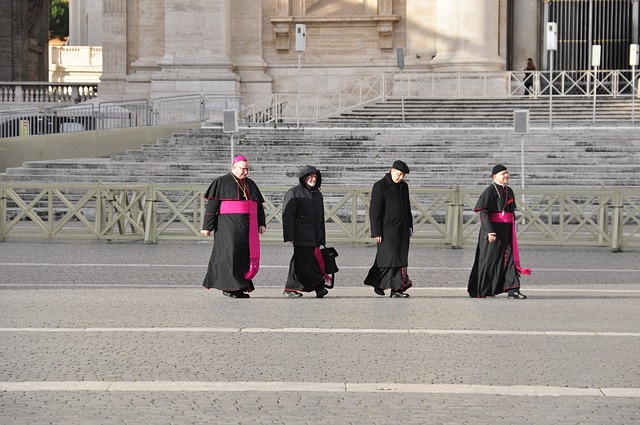 The first clear assembly of the Church is said to be the “Council” of Jerusalem (Acts 15), in which the synodal principle has as its paradigm the apostolic meeting with the delegates from other churches. The Book of Acts describes how “the apostles and the elders" (Acts 15:6), confronted with the disruptive problem of circumcision, gathered in Jerusalem with James presiding.[4].”
The spirit of synodality in this Council is shown by the fact that “Everyone plays an active part, though with varied roles and contributions. The question is presented to the whole Church in Jerusalem (παν τὸ πληθος: 15,12), which is present throughout and involved in the final decision (έδοξε τοις άποστολόις καί τοις πρεσβυτέροις σύν όλη τη έκκησία: 15,22)[5].”
Furthermore, in the fathers of the Church, it is in Ignatius of Antioch that this concept starts getting much weight. At the beginning of the second century, Ignatius of Antioch describes the synodal understanding of the various local Churches, which saw themselves as jointly embodying the one Church. In his letter to the community in Ephesus, he says all its members are σύνοδοι, "companions on the journey, by virtue of the dignity of baptism and their friendship with Christ.[6]”
Cyprian of Cartage would become one of those fathers of the Church who had a deeper understanding of the concept of Synodality. He formulated the episcopal and synodal principle that must rule the life of Church and its mission locally and at a universal level: “while nothing should be done in the local Church without the Bishop - nihil sine episcopo - it is equally true that nothing should be done without his Council (the Presbyters & Deacons) - nihil sine consilio vestro - or without the consensus of the people - et sine consensu plebis[22] - always holding firm to the rule according to which episcopatus unus est cuius a singulis in solidum pars tenetur (the episcopate is one, of which each member has an undivided share in it)[7].”
From the 4th century onward, the way of syniodality dominated in the Church. Ecclesiastical provinces and regions were created, the communion in the local churches headed by Metropolitans became channels of common deliberations and consultations.
Whenever the Church would face difficulties or opposition in doctrine and teachings, it would convene meetings and assemblies to foster the spirit of listening to one another. One of the outstanding examples of these assemblies is the Council of Nicaea in 325, convened by the emperor to clear out some Christological disputes. This was how the Church dealt with controversies and disputes throughout the first millennium. The first seven ecumenical councils can stand as examples of the exercise of synodality in the first millennium: the First Council of Nicaea in 325, the First Council of Constantinople in 381, the Council of Ephesus in 431, the Council of Chalcedon in 451, the Second Council of Constantinople in 553, the Third Council of Constantinople from 680–681 and finally, the Second Council of Nicaea in 787.
What about the process of synodality in the second millennium?
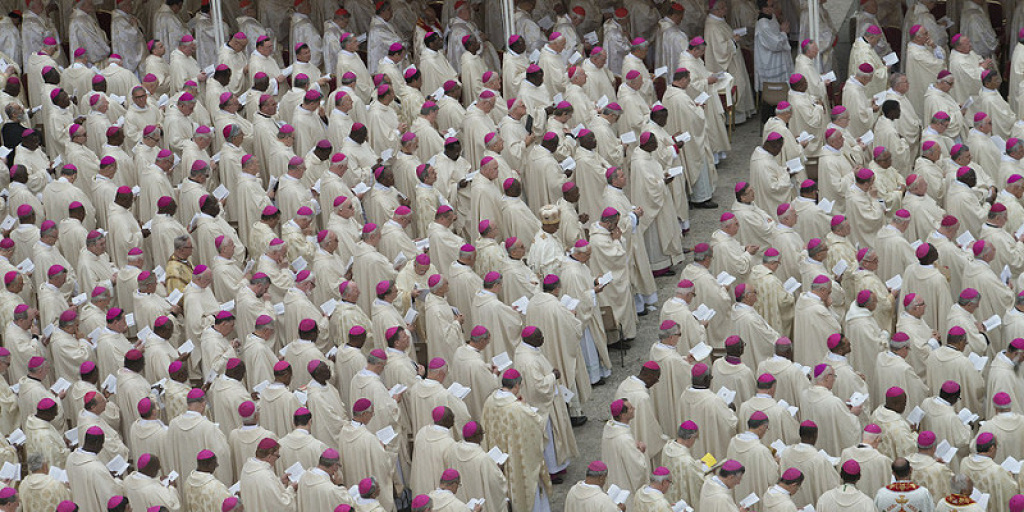 In the history of the Church, the medieval Church is known to have been under the grip of the emperor. From him came all the crucial decisions. In this context, the Church lost more or less its impetus to synodality. Thanks to the Gregorian reform and the struggle for the Libertas Ecclesiae, which helped the Church take back its autonomy in reaffirming the power of the Pope, the bishops, and the people of God. Bishops were not anymore appointed by the emperor but by the Pope after consultation with the local clergy.
However, at the end of the medieval period, the Church was on the brink of collapse because of the conciliarism movement. This movement was not promoting a synodal church at all. In fact, “At the end of the Middle Ages, a unique situation came about in the Western Schism (1378-1417), when there were simultaneously two, and later three, people claiming the title of Pope. The Council of Konstanz (1414-1418) solved this intricate question by applying emergency canon law foreseen in medieval canonical thinking and electing the legitimate Pope. In this situation, however, the conciliarist idea developed, whose aim was to impose a permanent council over and above the primatial authority of the Pope.[8].”
The crisis of the three popes brought up all the dirtiness of the Church: simony, corruption of the curia, selling of bishoprics, indulgences, etc. This crisis stands as witness of the difficulty of the process of synodality. When the dirtiness of the Church came to light, it triggered off what is commonly known as the Protestant Reformation in 1517. Thanks to this reformation, the Church, shaken from its slumber, underwent a purification process in what is known as the Counter-Reformation. This was done via the Council of Trent in (1545–63). This Council tried its best to reintroduce once more the spirit of synodality, but the Council came out with rather more disciplinary measures to counter the reformation; it rather created formalism and rubricism.
Nonetheless, Trent somehow helped the implementation of a synodal Church. In the document “Synodality in the life and mission of the Church," the international theological commission gives some examples in saying that, “The Council established the norm that diocesan Synods should take place annually, provincial Synods every three years, as a way of passing on the impetus of Trent's reforms to the whole Church. An example and model of this is to be found in what Saint Charles Borromeo did as Archbishop of Milan. In his long ministry, he convoked five provincial Synods and eleven diocesan ones. Saint Turibius of Mogrovejo undertook something similar in America: he convoked three provincial Synods and thirteen diocesan ones. There were also three provincial Councils in Mexico in the same century.[9].”
This synodal spirit continues from Trent to the Vatican I. However, up to this time, synodality, as it is understood now, was not yet implemented. The turning point was in the 19th century. In this century, thanks to prophetic writers like Johann Adam Möhler (1796-1838), Antonio Rosmini (1797-1855), and John Henry Newman (1801-1890), who returned to the normative sources of Scripture and Tradition, heralding the providential renewal that came with the biblical, liturgical, and patristic movements. They stressed that a “primary and fundamental element in the life of the Church is the dimension of communion, which implies an ordered synodal practice on every level, giving due importance to the sensus fidei fidelium, intrinsically related to the specific ministry of the Bishops and the Pope.[10].”
In the Second Vatican Council, the concept of synodality saw its apex. The dogmatic Constitution Lumen Gentium sets out a vision of the nature and mission of the Church as communion, with the theological presuppositions of a suitable re-launch of synodality: the mystical and sacramental conception of the Church; “her nature as People of God on a pilgrimage through history towards the heavenly homeland, in which all her members are by virtue of baptism honored with the same dignity as children of God and appointed to the same mission; the doctrine of the sacramentality of the episcopate and collegiality in hierarchical communion with the Bishop of Rome,” says the international theological commission.
These people of God," says Lumen Gentium, “cannot err when working together with its leaders, The entire body of the faithful, anointed as they are by the Holy One, cannot err in matters of belief. They manifest this special property by means of the whole peoples' supernatural discernment in matters of faith when "from the Bishops down to the last of the lay faithful" they show universal agreement in matters of faith and morals.[11].”
Synodality became materialized in the decision of Pope Paul VI when he instituted the Synod of Bishops. This synod helped foster the communion of the whole Church.
With Pope John Paul II, this spirit of synodality and consultation became very typical in the Church. In one of his speeches in 2000, he stressed that much had been done in the understanding of the Church as the people of God walking together in communion, “but there is certainly much more to be done, in order to realize all the potential of these instruments of communion …(and) to respond promptly and effectively to the issues which the Church must face in these rapidly changing time.[12].”
Pope Benedict XVI and Pope Francis continued in the spirit of Jon Paul the second until this very day. Since throughout history, the Church has been living the spirit of synodality in a more or less unconscious way, Pope Francis has launched the synod on Synodality to bring this process from an unconscious to a conscious level under the guidance of the Holy Spirit. Pope Francis wanted this process to be done in full communion and participation, bearing in mind the mission of the Church. This process has been launched and will continue until 2023. However, as stated in the first lines of this essay, synodality is a concept that escapes the dates of history; it is eternal. The hope is that, after the synod, synodality will become the eternal garment of the Church until its Bride comes.
[1] Synodality in the life and mission of the Church, international theological commission, (9th Quinquennium), March 2 2018, no 13.
[2] Idem. No 7
[3] Documentation Serving Communion: Re-thinking the Relationship between Primacy and Synodality, A Study by the Saint Irenaeus Joint Orthodox-Catholic Working Group, October 6, 2021, no 12.3
[4] Idem. No 15.1
[5] Synodality in the life and mission of the Church, international theological commission, no 21
[6] Ignatius of Antioch, Ad Ephesios IX, 2; F.X. Funk (ed.), Patres apostolic I, Tubingen, 1901, p. 220.
[7] Cyprian, De catholicae ecclesiae unitate 5 (CSEL III,1, p. 214)
[8] Synodality in the life and mission of the Church, international theological commission, no. 34
[9] Idem, n. 35
[10] Idem n. 38
[11] Lumen Gentium 12
[12] Saint John Paul II, Apostolic Letter Novo Millennio Ineunte, January 6 2001, 44; AAS 93 (2001), 298.