



Done by Ulrich Mokham Saa -
Pakikisama is a Filipino value which is as old as the Philippines. Actually, pakikisama is a value that is practiced by the Filipinos since the beginning of their history. It is what keeps them powerful in their families, in the workplace, and in the church. Indeed, what is pakikisama? Why is it considered as a value? How does pakikisama appear in the family, in the workplace, and in the church? Finally, what can be the connection between the gospel and the value of pakikisama? The purpose of my study is to discover more about the Filipino culture, particularly Filipino values. In fact, being a foreigner and missionary, I believe that before sharing the gospel to someone, we have to know and understand that person. To know the Filipinos, I have to understand the way they behave and why they behave as such.
I. How is pakikisama a Filipino value?
1. What is a value?
According to the New Webster’s Dictionary, a value can be defined as “(1) That which is desirable or worthy of esteem for its own sake; (2) Things or quality having intrinsic worth; degree of excellence; (3) the worth of thing in money or goods at a certain time, market price.”[1] We can easily notice that, in these three definitions, there is something in common which is worth. Actually, worth always refers to something good, enjoyable, useful. A value is not only positive in function, but desirable by others as well. If we say that someone has a value, it means that he/she believes that some positive ways of behaviour are always preferable to others and the ways he/she acts express it. For example, if someone believes in peace and behaves in a peaceful way, we can see that he/she has the value of peace. Thus, we can say with Landa Jocano that a value is a criteria to recognize, express, and evaluate social realities in our area in terms of their importance, disability, significance, worth, and usefulness to us. [2]
Therefore, the most appropriated Filipino term of value is pamantayan which comes from the root-word pantay (meaning the same level, to put in the straight line, not more [Labis] not less [Kulang]), and it means observing good manners and right conduct publicly or privately. If someone wants to be loved and welcomed in a flock, he has to behave as what the pamantayan deems. Noticeably, one of the important elements of pamantayan is halaga which refers to the “qualities we attach to ideas we have, things we observe, sentiments we feel and events we experience.”[3] These qualities express our ways of thinking, feeling, and acting.

2. What is pakikisama?
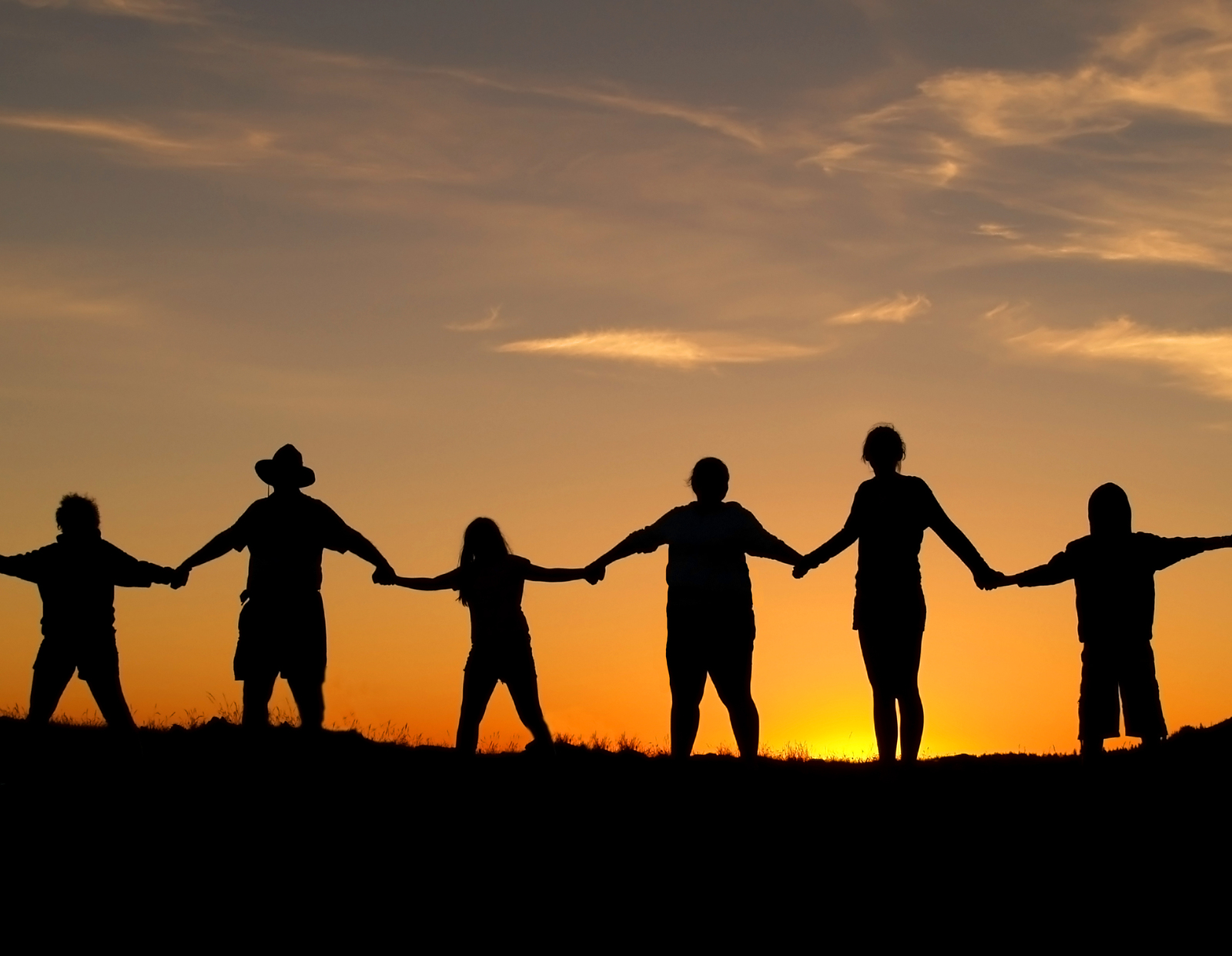
The term pakikisama comes from two Tagalog words: sama and paki. The root word sama means “to accompany, to go along with,” and the prefix paki, please, kindly. Etymologically speaking, pakikisama means kindly or please accompany or come along with or go along with. According to Tomas Andres and Pilar Corazon Andres, pakikisama means, “the Filipino natural instinct of uniting one’s will with the will of others in a gang or peer group of the sense of camaraderie.”[4] The purpose of pakikisama is to build and strengthen good relationships with others, to promote peace and fight against war, conflict. This is why Frank Lynch understands pakikisama as the ability to get along with others and avoid conflict because after a good relationship is exhausted the opposite of pakikisama appears; i.e. struggle, violence.[5] Therefore, we can understand this Filipino value in three steps. First, leaving one’s own will and following the will of the flock; second, sharing what one has received with the flock; third, sympathizing in the pains of others. The will of the flock is more important than one’s own will. In addition, Filipinos generally have to share a part of their first salary with others. Third, we have to assist a family who lost someone by helping run errands or by cooking together with the family, to name a few. For example, if someone is invited by his friends to a party, even if he initially does not want to go, he has to go because of pakikisama. Thus, we can notice that pakikisama is not just a simple camaraderie, but interestingly so; it is like a wedding union according to Diksyunaryo Ng Wikang Filipino.[6]
3. Pakikisama is a Filipino value
As aforementioned, we defined the word value to always refer to something good, desirable, enjoyable to us and to the community. Also, the purpose of pakikisama is to have a good relationship with others and to avoid the conflict pakikibaka. So, if kahalagahan[7]which is a Filipino value that means price, worth and the like, we can only say that pakikisama is a Filipino value because it refers to the Filipino culture and has a purpose to make people happy, to be in peace with others and to be closer to each other. In essence, pakikisama makes the Filipinos basically good. This is manifested by the fact that when a disaster occurs, the Filipinos respond by instinct. As a Filipino, there is always the tendency, the availability to be of help, and at times, even at the risk of one’s life. This trait can be seen clearly when a fire occurs around the neighborhood or when someone is drowning or when a relative is sick. For example, when the typhoon happened in the Philippines last year, they were a lot of mobilisation to help the families who had lost everything; even President Aquino was concerned about it, and went to Mindanao to share the suffering of the people there.
II. How pakikisama is practiced in the Philippines
1. Pakikisama which is practiced in the family
According to Dr Andres, Filipino culture is family-oriented. This orientation is because of pakikisama which is called in the Tagalog bayanihan or family-oriented. In fact, the first place where we find pakikisama is in families because it is in the family where children learn about pakikisama from their parents. This practice in families is evident in two levels.
First, there is not a time when parents gather their children and teach them pakikisama. They have to learn by seeing the way their parents act. In this case, the parents want the children to know how to answer, ask, disagree by using diplomatic skills. If the parents want to make their children aware about a job which they should do, they would use a careful way to express it (for example, instead of saying “the house in which you are living is dirty”, he will say, “If we can clean our house it could look more beautiful”). Therefore, the children will understand that they have to clean the house. When the children start to understand how to be diplomatic by asking or telling things, they start the second step.[8]
Second, we reach pakikisama as harmony-oriented in the family. According to Alfredo and Grace Roces, pakikisama is a desired skill taught to the youth; it is evoked to win over a recalcitrant individual to a family’s policy to make it unanimous. We can see that in some house-families, there is not only the nuclear family who are living there, but also the extended family. Owing to pakikisama, we should welcome our relatives in our houses and help them as much as we can. In this case, the receiver of pakikisama can give thanks for this, not by giving money, but by cleaning the house or cooking, apart from other household chores.[9]
Therefore, pakikisama in families has two levels: the first is to be diplomatic in order to avoid pakikibaka (conflict) and the second is to learn the spirit of togetherness in the family, both nuclear and extended.
2. The practice of pakikisama in the work place
In the workplace, we have a relationship between team leader and team members, and the team members among them. Pakikisama is a good tool to motivate the team members. From Andres, the leader should be close to his team members and practice pakikisama as much as he can. For example by being a sponsor in some weddings of their workers, by attending to his workers’ party and even by organizing some parties for them. The boss can lend company cars for a department’s use or important personal gathering like weddings. He also lends money. Through this pakikisama of the leader, the subordinates remember the boss’ birthday and other special occasions in his life and are more committed in the workplace.[10]

In the relationship among workers, Alfredo and Grace Roces tells us that pakikisama implies some wills to gather all the opinions and push them to do as much as they can for the improvement of the company, “Sacrifying individual welfare for the general welfare.”[11] Through some studies in Manila’s docks by Randolf David, we noticed that a worker, who does not practice pakikisama, even if he is good at work, will be surprisingly considered, workless or unfit.[12] Moreover, there is some informal “tayo-tayo” arrangement where one worker takes over another person’s job when the latter has to live the office for some personal reasons. The tayo-tayo is done at the back of their superiors. The one who is doing pakikisama is sure that the same things may also happen to him one day and others can help him in return. Thus, in the work place, we can notice pakikisama at any level. Furthermore, usually, when a worker gets his first salary, he/she should share a part of it with his/her colleagues by inviting them for a outing or making a party for the: that is pakikisama.
3. Pakikisama in the church
In the church, we can see pakikisama deeper than in the workplace. Actually, in the church, the priest is a leader in service; he is the first to practice pakikisama to his congregates through his daily actions, such as visiting their houses, being always available to serve, understanding and advising them, accomplishing properly his work, such as giving the sacraments, blessing their houses and so on. That is why Andres affirms that the sacraments are good to start a foundation In a relationship.[13] Moreover, the congregates who have to look after Jesus, practice their pakikisama in the same line with Jesus and his teaching. Isidro D. Carino in his book entitled, Reviving and developing desirable values in Filipino boys and girls, connects the service to others and love of God. He said, “To do one’s duty to God is to do good things to other people and to be an active participating citizen.”[14] In fact, pakikisama has been found in Christian values such as service, help and so on. Therefore, the congregates who practice pakikisama are able to help, share and understand each other; they also forgive and forget the mistakes of others when pakikibaka happens.
III. Relationship between pakikisama and the gospel from Christian perspective
1. Pakikisama builds peace among others
Due to pakikisama, Filipinos have to be in good relationship with others; hence, there will not be violence and, they will be peacemaker among them. If we understand peace as “the state of living in a friendship with somebody without arguing,”[15] we can say that a relationship is a relation without violence, or war among peoples. Jesus taught us peace when he said, “I leave you peace, my peace I give you.”[16] We can understand that pakikisama is a way of peace and the Gospel sustains it by its teachings.
2. Self-responsibility or initiative
Do you remember the practice of pakikisama in families in the first step regarding the training of children? In fact, I said that the formation is given by observation. The self-responsibility comes from the fact that the one who has learned or received pakikisama feels the desire to practice it either to the one who did it to him or to an unknown. According to the tradition, the pakikisama that we have received should not remain inward; it has to be shared with others. It is in the same line with what Jesus said in the Gospel “love one another; just as I have loved you, you also must love one another.” [17] So, conscious about love that we have received from God, we are called to share it to others. Aware about having pakikisamareceived from someone, I must share it also to others; we vividly notice that pakikisama may be also applied as a Christian value and not only as a Filipino value. Pakikisama is for everyone. Through pakikisama, we become responsible about others and ourselves.
3. Togetherness as Jesus said
For Filipinos, pakikisama also means togetherness, the act of working in order to reach a good purpose. For Carino and Amor, “a friend is a gift of God.”[18] In the same line, Helen Steiner Rice shows us that among the splendid gifts that God gave us, there a gift of understanding that we may only find in loving friends.[19] Thus, in a world full of troubles, we need someone with whom we can share everything and work together joyfully. Indeed, because our friends are God’s gift, we have to understand and work with them in grateful joy. As Jesus said, “be united as I and my Father are united.”[20] United in this case implies understanding, working together and so on. If we could consider each other a neighbor, a friend or a brother, then this world would really be a wonderful world”[21] In relation to the Gospel, pakikisama invites us to work together in order to build peace, good friendship, and love for one another.