



“Where Sin increased, Grace abounded all the more” (Romans 5:20)
A reflection on Sin and grace during Lenten Season 2022
The letter to the Romans is said to be the most important of the thirteen NT writings attributed to Paul not only because it is the longest letter of Paul, but also it is the most mature statement of the gospel the Apostle preached among the Gentiles. ‘’It deals with issues of sin, redemption, the Mosaic Law, faith, justification, the Spirit, Israel, and the moral life.’’[1] Like many writers, Paul’s message is not safe from possible misinterpretations, conscious or not they might be. ‘’Where sin increased, grace abounded all the more’’ should therefore be properly pondered so as not to answer positively the question Paul raised in chapter 6 next to our leading thought. ‘’What then, shall we say? Shall we persist in sin that grace may abound? Of course not!’’ (Romans 6:1). The Apostle preaches on the new condition of those who have embraced the gospel as they are justified, reconciled, and saved by Christ who is the new Adam.
Sin and grace, therefore, remind us of two figures namely Adam [the Old] and Jesus Christ [the New Adam]. Indeed, Paul states, ‘’but where sin increased, grace abounded all the more, so that, just as sin exercised dominion in death, so grace might also exercise dominion through justification leading to eternal life through Jesus Christ our Lord.’’ (Romans 5:20-21). How do we understand the relationship between sin and grace within the saving plan of God? In which regards the notion of sin and grace is to help me appropriate the Lenten call for conversion?
Sin and Grace within the saving plan of God
 The mystery of humanity and salvation evolves around the two figures of Adam and Jesus. Paul reminds that ‘just as one man’s violation led to condemnation for all, so one man’s act of righteousness leads to justification and life for all. For the CCC “Sin is present in human history; any attempt to ignore it or to give this dark reality other names would be futile. To try to understand what sin is, one must first recognize the profound relation of man to God, for only in this relationship is the evil of sin unmasked in its true identity as humanity's rejection of God and opposition to him.”[2] In reality, behind this false promise of boundless freedom, of absolute autonomy of the will (which is impossible for a creature), a great lie is hidden. For when we try to decide on our own what our will should desire, without relying on God’s help and guidance, a crust of evil is formed that enslaves us and shackles us, and that prevents us from being happy because it separates us from God.
As far as the relation of human beings to God is concerned, the figures of Adam and Eve echo to us the very original reality in which humanity has experienced opposition to God, a desire for false freedom. Genesis gives us a hint of what the evil one does to humanity in order to alter the relationship with God: ‘’You will be like God, knowing good and evil’’[3]. It is all about breaking the relationship between God and humanity by suggesting not a relationship but false independence from God’s presence. This is the original sin. The image of Adam and Eve hiding from God’s sight reminds us of an obvious consequence of sin, separation/division, which bears in se the identity of Evil/devil. And all humanity is marked by the wounds of this experience since it reveals the very human inclination to sin. Yet, the good news is that ‘where sin increased, grace abounded all the more. Paul meanwhile challenges us in this matter: ‘’What then, shall we say? Shall we persist in sin that grace may abound? Of course not!’’[4]
Jesus Christ is the one through whom grace abounds for us. His Incarnation, Words, Deeds, Passions, Death, Resurrection, and sending of the Holy Spirit are the events that mark God’s presence in humanity for universal salvation. ‘’We must know Christ as the source of grace in order to know Adam as the source of sin. The Spirit-Paraclete, sent by the risen Christ, came to ‘convict the world concerning sin’, by revealing him who is its Redeemer.’’[5]
Sin and Grace in our lives
 The reality of sin on one hand is ours in the sense that we are all wounded by the original sin. However, “original sin does not have the character of a personal fault in any of Adam’s descendants.”[6] It is a deprivation of original holiness and justice, but human nature has not been totally corrupted: it is wounded in the natural powers proper to it, subject to ignorance, suffering, and the dominion of death, and inclined to sin - an inclination to evil that is called concupiscence. Everyone has experienced this fragmentation, this incoherence, and internal weakness.
Yet, we come into the world with the “seeds” of all the virtues, which are meant to be developed by the exercise of our freedom, under the influence of God’s grace, and with the help of others. During a meeting with the parish priests of the diocese of Rome on February 18, 2010, Pope Benedict XVI highlighted that being human does not merely mean what many “People say: ‘he lied, but that’s only human,’ ‘he stole it, but that’s only human.’ This is not really being human, the pope said. Being human, he added, means being generous, being good, being a just person.”[7]
Grace, on the other hand, is a participation in the divine life, introducing us into the loving intimacy of God and enabling us to act in a new way, as God’s children. Indeed, God’s response to our sins is the Incarnation of our Lord Jesus Christ and the Redemption carried out by Him. Jesus reconciles us with God, frees us from the slavery of sin, and grants us the gift of grace, a “gratuitous gift that God gives us to make us participants in his Trinitarian life and able to act by his love.”[8] Therefore, ‘’ where sin increased, grace abounded all the more’’ is to be experienced in our relationship with Jesus Christ. Discipleship becomes in this regard a concrete way, despite our fragilities, to share in Jesus’ life. Only in this experience of discipleship, we are enabled to evangelically witness that "we have seen his glory, the glory of the Father's only Son, full of grace and truth" and "from his fullness we have all received grace upon grace" as children of God (see John 1: 14-16).
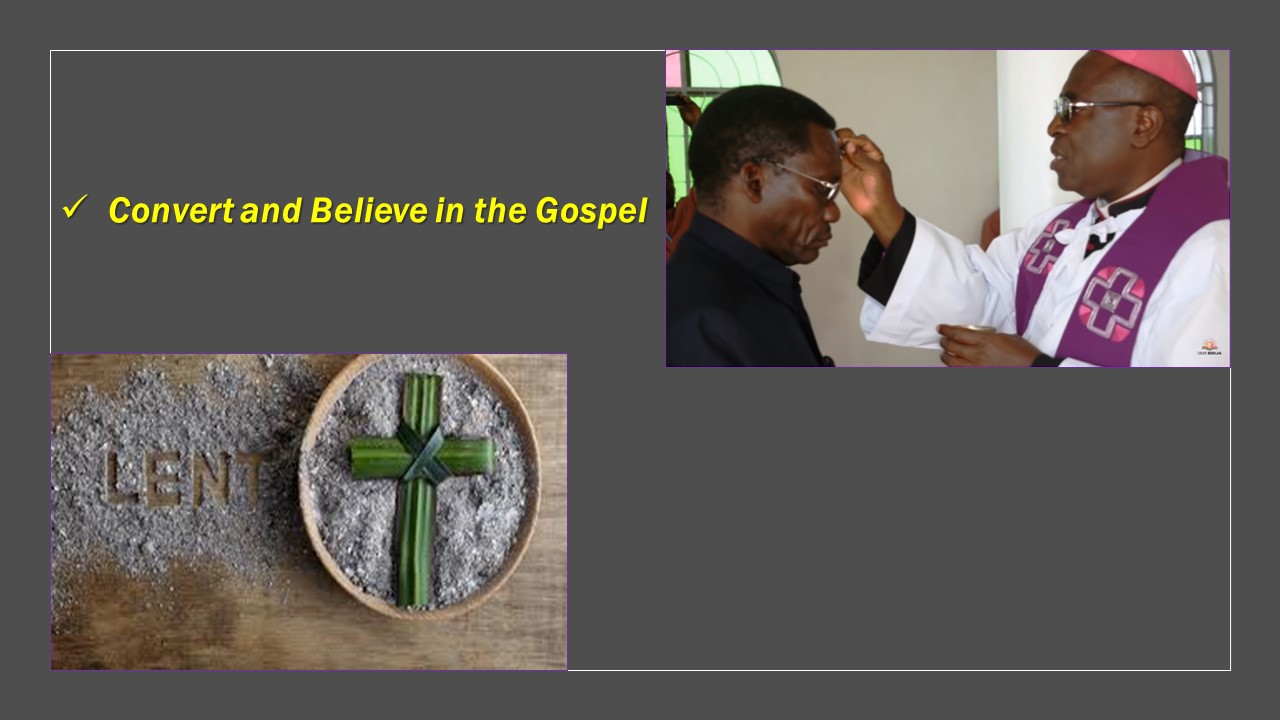
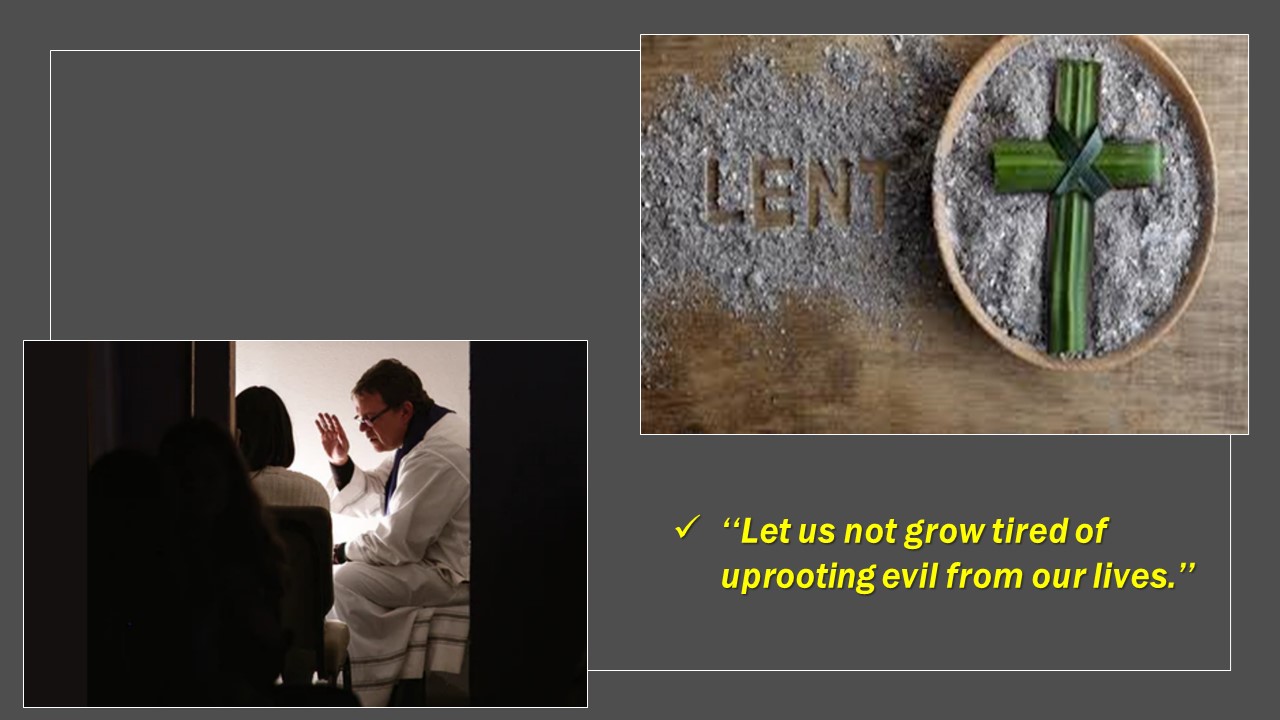
May this Lenten season become for us an opportunity to experience these truths of our faith: “Where Sin increased, Grace abounded all the more”. From the very beginning of Lent, we are called to conversion [from sin] and believe in the Good News [Jesus, Grace]. We convert from everything that takes us away from God. We convert from sin. It is in this process of Conversion that Jesus fills us with his presence, grace. Are we open to going back to God even after we have deliberately distorted our relationship with him? “Let us not grow tired of doing good”, says Pope Francis in his 2022 Lenten message, “let us not grow tired of praying”, “let us not grow tired of uprooting evil from our lives”, “let us not grow tired of doing good in active charity towards our neighbors”.
Some reminders on Sin and grace:
- Human nature has not been totally corrupted by sin.[9]
- Grace is a Person: Our core experiences of grace bear the characteristics of Jesus Christ. Grace is Incarnate and our free answer to this mystery is to become Jesus’ disciples. In this way, we can live the reality where Grace is much more powerful than sin (the saving presence of Jesus).
-Grace is “a participation in the life of God”[10]
[1] Frank J. Matera, Strategies for Preaching Paul, 2nd Printing-Paulines Philippines, 2009, p.17
[2] Catechism of the Catholic Church, no 387
[3] Genesis 3:5
[4] Romans 6:1
[5] Catechism of the Catholic Church, no.388
[6] Idem, no. 405
[7] Benedict XVI, Meeting with the parish priests of the diocese of Rome, 18 February 2010.
[8] Compendium of the Catechism of the Catholic Church, no. 423.
[9] Catechism of the Catholic Church, no. 405.
[10] Catechism of the Catholic Church, no. 1997.