


The active participation of the laity in the Church's evangelizing mission

The active participation of the laity in the mission of the Church is one of the crucial questions in the Church today. In this article, we use the term “lay” or “laity” to refer to all who have been baptized in the Church but are not clerics (bishops, priests, and deacons) and don't belong to a religious institute or a society of apostolic life. The lay faithful are, in fact, the majority of the Church members. In the Philippines, they are estimated to cover 99.96 % of the Church members[1]. Our purpose here is to rediscover and appreciate the missionary mandate of the laity, which every Christian faithful receives from Jesus Christ at baptism, and to reflect on how they are to carry it out in their daily life. For this purpose, we will try to appreciate the Second Vatican Council by rethinking the concept of “the people of God”; finally, we will deepen into the holistic understanding of mission today, taking insights from Evangelii Nuntiandi and Redemptoris Missio.
1. Vatican II and the Concept of “People of God”.
 In the pre-Vatican II Church, the Church was understood mainly in hierarchical terms, with the pope on top, then the cardinals, the bishops, the priests, the religious (consecrated), and at the lowest level, the laity. It was like “an unequal society, that is, a society comprising two categories of persons, the Pastors, and the flock."[2]. The clerics were considered the "teaching Church," and the laity, the "listening Church." "There was a marked separation between clergy and laity."[3]. The evangelizing mission was the duty and right of those in the higher position in the Church; the lay people were passive members of the Church with one duty, "to allow themselves to be led, and like a docile flock, to follow their pastors."[4]. However, the Second Vatican Council came out with another understanding of the Church as the “People of God”. Thought the Church remains hierarchical, as the people of God need shepherds[5], it is seen as a communion, as a sacrament of the saving unity in the world[6]. Hence, everything that is said of the People of God is addressed equally to laity, religious, and clergy[7]. The ordained ministers were not established by Christ to undertake alone the whole salvific mission of the Church to the world, but they cooperate with the faithful in this task[8].
By the sacrament of baptism, all the Christian faithful are incorporated into Jesus Christ and become part of the People of God. By virtue of their baptism, they all share “in their own way” in the priestly, kingly, and prophetic office of Jesus Christ.”[9] Being members of the Body of Christ, the Christian faithful are called to participate in the mission Christ has entrusted to the Apostles, which is the mission of the Church: “Go to the whole world and proclaim the Gospel to all mankind” (Mk 16:15). Like those who were converted through the preaching of the Apostles went around to spread the Word of God (Acts 11: 19-21), everyone who has received the divine message and has come to faith in Jesus Christ, has the obligation and right to keep on spreading the Word of God today to all the nations. In responding to this vocation, they also respond to the call to be the salt of the earth and the light of the world (Mt 5:13-14). Though in the Church there is the diversity of ministries, there is the unity of mission, the mission of the whole people of God.[10] On this, the mission of the Church is not an exclusive gift of the ordained ministers, but a reality where every Christian faithful has a role to play by right.
Hence, we see how Vatican II broadened the understanding of evangelization or mission and allowed the active involvement of the laity. At Vatican II, there were two senses to mission and evangelization. First, it meant bringing the Gospel to areas where it was not yet known (in missionary lands). Vatican II broadened the concept of mission and evangelization and included the responsibility of the whole Christian community while recognizing the missionaries' role.[11] The second sense of mission viewed all activity of the Church as, in some sense, missionary (the Church is missionary by nature). Thus, the obligation of spreading the faith became a duty of every disciple of Jesus Christ, according to his ability[12].
2. The holistic understanding of mission
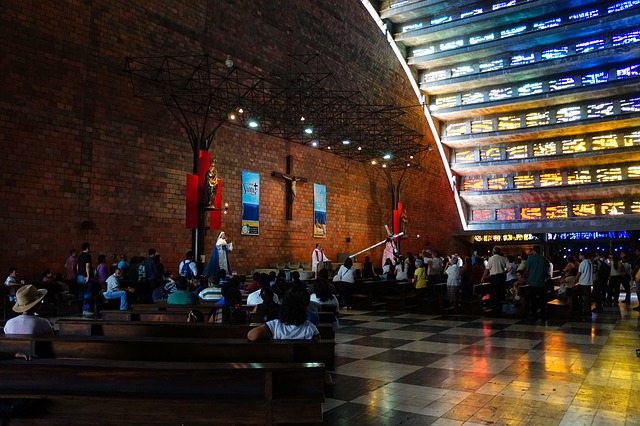 The holistic or integral approach to the Church's mission of evangelization brings us to the greater understanding and appreciation of the laity's role in it. Getting insights from Evangelii Nuntiandi and Redemptoris Missio, we will figure out how, where, and when the laity does fulfill their vocation to evangelize.
Pope Paul VI in his apostolic exhortation, Evangelii Nuntiandi, portrays evangelization as a complex reality. He notes that "any partial and fragmentary definition which attempts to render the reality of evangelization in all its richness, complexity and dynamism does so only at the risk of impoverishing it and even of distorting it. It is impossible to grasp the concept of evangelization unless one tries to keep in view all its essential elements."[13]. Later, John Paul II, in Redemptoris Missio, sustains the same integral view of the evangelizing mission of the Church. “Mission is a single but complex reality, and it develops in a variety of ways."[14]. This point of view is repeatedly emphasized in this encyclical (#20, 41-60).
The Church’s mission of evangelization encompasses five principal elements: 1) presence and witness,2) commitment to social development and human liberation, 3) liturgical life, prayer, and contemplation, 4) interreligious dialogue, and 5) the explicit proclamation and catechesis. The lay Christians have the capacity to participate actively in all these dimensions of evangelization. In some of these dimensions, they can do even more significantly than the clerics and the consecrated.
Let’s now deepen into these elements to grasp the integral nature of evangelization. In fact, Christian witnessing presence is the way of living every day according to the Gospel, putting into practice the Christian faith and values. It is the "initial act of evangelization."[15]. Through loving people, living in harmony, caring for the poor and the needy…, the lay Christians witness to Christ who is love, mercy, and compassion. They witness to the Gospel in family, at school, at work, and in their different daily activities. By doing so, they are genuinely evangelizing and participating actively in the mission of the Church. In today’s world, the laity’s presence in social and mass media is another instance for evangelization. They can communicate the faith in different ways using these means. For sure, we need also the explicit proclamation of the Gospel and catechesis to reinforce our witness so that Jesus may be known to all. The lay catechists play an essential role in this aspect as they work to help others mature in their faith and be ready to defend it.
The Church’s commitment to social development and human liberation is also evangelization. Through this commitment, the Church continues the mission of Christ to proclaim liberty to the captives and recovering of sight to the blind and to set at liberty those who are oppressed (Luke 4:18). Evangelization reaches all the dimensions of human life, including social concerns. The lay Christians, being involved in society and politics, have the duty and right witness to their faith, hope, and love of God by their commitment to lift up the poor and the marginalized, and to promote life, so as to make Christ's salvation reach everyone in their social condition.
Furthermore, liturgy, prayer, and contemplation as experience with Christ, the Master who sends, cannot be separated from evangelization. The agents of evangelization nurture their relationship with Jesus by celebrating the sacraments, prayer, and meditation of the Word. The laity too is committed in the liturgical life of the Church by their active participation in the liturgical celebrations and where they exercise different ministries according to their state. By their prayer, contemplation, and participation in the liturgical celebrations, the lay faithful are actively carrying out the mission of the Church.
As for the inter-religious dialogue, Pope John Paul II asserts that it is “a part of the Church's evangelizing mission.” Understood as a method and means of mutual knowledge and enrichment, dialogue is not in opposition to the mission ad gentes; indeed, it has special links with that mission and is one of its expressions.”[16] The lay Christians practically live in their neighborhood with people from different religions. They are also called to the dialogue of life, living in harmony, mutual respect and acceptance. By loving and dialoguing with other believers, they are participating actively in the mission of the Church. The laity still needs to make more efforts in this area, especially in the Asian context with many and diverse religions and cultures.
Based on this integral approach, we are assured that evangelization is not an exclusive duty of the priests and the consecrated, but engages the whole people of God, this is, every baptized Christian.
By virtue of their baptism, all the people of God participate in the mission Christ has entrusted to the Church. They share in the common priesthood and have the right and obligation to make the divine message of salvation known to all. Evangelization is an emergency even in today's world. It requires the effort of the clerics and the consecrated men and women and the active participation of the laity, who are the majority of the people of God. Hence, there is a need for the intensification of the laity's apostolate in the Church. The lay Christians are to carry out this apostolate everywhere in their daily lives, inside and outside of the parochial structure. Parents are to evangelize their children in the family, families are to spread the good news to their neighborhood by words as well as by witness of life, and everyone is called to carry out this mission in their ordinary life. Let us also mention the importance of the lay apostolate in countries where the pastoral of the clergy and the consecrated men and women is hindered by political or social systems, or where their ostensible presence can put their lives in danger. Oscar V. Cruz suggests that the lay people can easily mingle and mix with the "unevangelized" or "de-evangelized" people in the different parts of the world in such cases.[17]
By Byamungu M. Augustin, sx.
[1] Data found in O.V. Cruz, JCD, DD, Call of the Laity, (2005).
[2] Pope Pius X, Vehementer Nos (1906), no. 8
[3] CHARLES BERTILLE, Empowering Asia’s Laity. FABC Theology of the Laity and its Relevance for the Formation of Lay Leaders in Asia’s Local Churches. (Quezon City, Philippines, Claretian Publications, 2014),23-31.
[4] Pope Pius X, idem.
[5] See Lumen Gentium, III, 18.
[6] See LG II,9.
[7] Idem, III, 30.
[8] Ibidem.
[9] LG 30-31.
[10] Vatican II, Apostolicam Actuositatem, no 2.
[11] James A. Corriden, Thomas J. Green, and Donald E., The Code of Canon Law. A Text and Commentary (Theological Publications in India, Bangalore, 2000), 143.
[12] Idem.
[13] Paul VI, Evangelii Nuntiandi. Apostolic Exhortation. (1975). No. 17.
[14] JOHN PAUL II, Redemptoris Missio. (1990), no. 41.
[15] EN. 21.
[16] RM, 55
[17] OSCAR V. CRUZ, DD; Call of the Laity. (Eres Printing Corporation, 2005), 63.